

Varietal Characteristics
The sour cherry tree (Prunus cerasus), is a tree belonging to the Rosaceae family, native to Europe, from the British Isles to Russia, and the Middle East. Already known in ancient times, it was described by Pliny the Elder, who distinguished between sweet and sour cherry trees based on the taste of their fruit.
This deciduous tree can reach a height of 32 metres and have a trunk diameter of 1.5 metres. With a lifespan of about 100 years, the sour cherry tree is characterised by smooth purple-brown bark, with horizontal grey-brown lenticels in young specimens, which become darker, thicker and cracked with age.
The leaves are alternate, ovoid and pointed, 7–14 cm long and 4–7 cm wide, hairless and pale or bright green on the upper surface. The white pedunculate flowers are arranged in corymbs of two to six, each with a 2–5 cm peduncle. With a diameter of 2.5-3.5 cm, the flowers have five white petals, yellow stamens and a superior ovary; hermaphroditic, they are pollinated mainly by bees. Flowering occurs in early spring, coinciding with the production of new leaves.
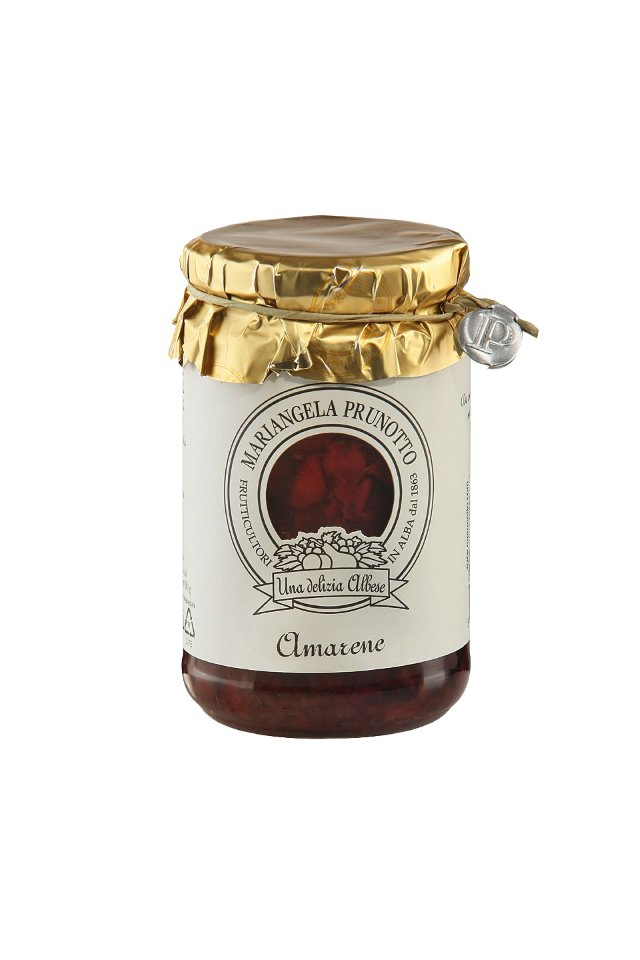
The fruit of the sour cherry tree is a fleshy drupe 1-2 cm in diameter, which can be larger in some cultivated varieties. The colour varies from bright red to dark purple when ripe in mid-summer. The taste of sour cherries varies from sweet to quite astringent and bitter, and they contain a single stone. Sour cherries are highly prized by many birds and mammals, as they are one of the first fruits of the season.
Who does not remember the excitement, as a child, of climbing a sour cherry tree to taste its fruits directly?