For shipments outside Italy, please contact us directly.

*Le immagini sono inserite a solo scopo illustrativo.
Il prodotto potrebbe differire per alcuni dettagli.

*Images are for illustrative purposes only.
The actual product may differ in some details.

Fruit preserves

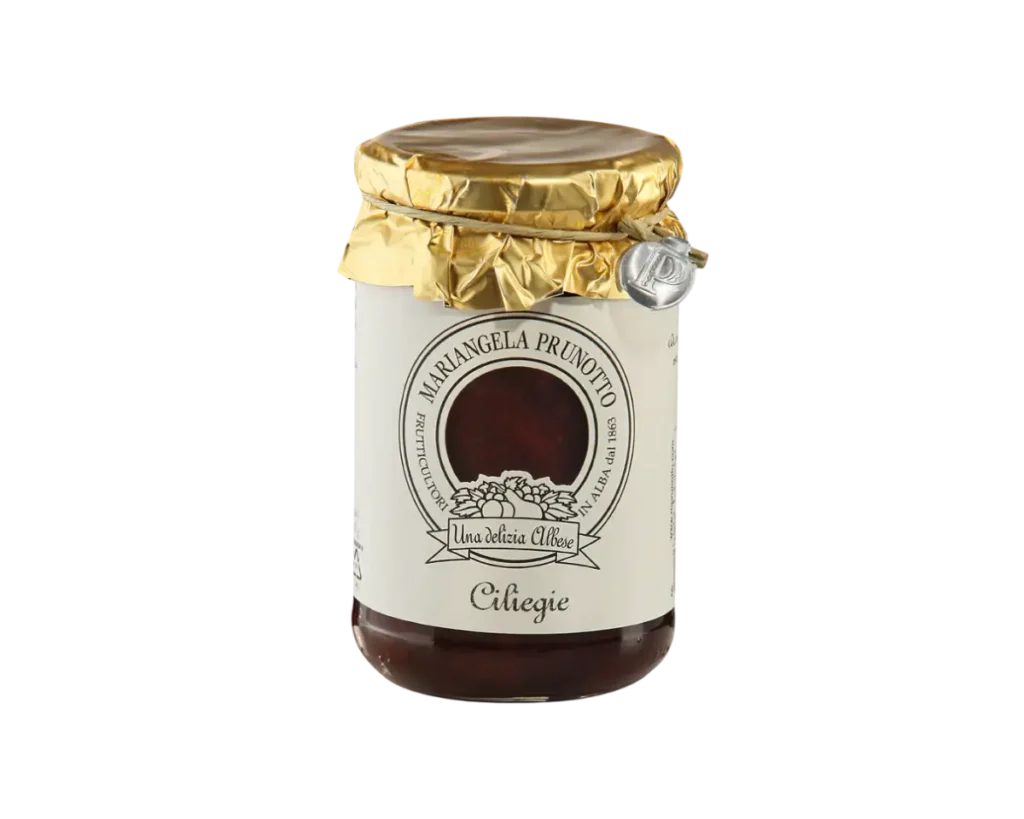
Cherry Compote

Our company has always grown cherries in the orchards of Alba. They are harvested strictly by hand several times during the season to respect their natural ripening process and allow us to obtain a product that is perfectly ripe. This gives us a naturally sweet, high-quality raw material that we process within a few hours of harvesting. The result is a preserved product with the same characteristics as the fresh product, with unique organoleptic properties that enhance the particular flavour of cherries, a typical spring fruit that is excellent preserved for consumption in winter, when there is not much fresh fruit in season. It is a classic preserved fruit that reminds us of the ones our grandmothers used to make for us. All this is proven by the quantity of fruit used; 145 grams of juicy fresh cherries are used to produce 100 grams of jam. It is excellent on freshly toasted bread, spread with mountain butter. The result is a rich and wholesome breakfast or a refined snack!

Add products to cart and contact us for pricing

1

Share

Varietal Characteristics

The cherry tree (Prunus avium), also known as bird cherry or wild cherry, is a majestic tree belonging to the Rosaceae family. Native to Europe and the Middle East, this tree has fascinated mankind since ancient times. The cherry tree can reach a height of 32 metres and develop a trunk with an impressive diameter of 1.5 metres. It has a surprisingly long life span, reaching up to 100 years. During its growth, the bark of the young cherry tree is smooth and a beautiful purple-brown colour, adorned with horizontal grey-brown lenticels. Over the years, however, the bark darkens, thickens and cracks, bearing witness to its venerable age. The leaves of the cherry tree are arranged alternately and are ovoid and pointed in shape. They measure between 7 and 14 cm in length and between 4 and 7 cm in width, with a hairless surface that varies from pale to bright green. In spring, the tree is covered with white flowers, gathered in corymbs of two to six flowers. Each flower, hanging on a 2-5 cm long peduncle, has a diameter of 2.5-3.5 cm and has five white petals, yellow stamens and a superior ovary. These hermaphroditic flowers are pollinated by bees, giving rise to an enchanting bloom that coincides with the appearance of new leaves.
The fruit of the cherry tree is a fleshy drupe, commonly known as a cherry, which varies from 1 to 2 cm in diameter, although it can be larger in some cultivated varieties. Ripe cherries, which appear in early summer, range in colour from bright red to dark purple. Their flavour ranges from sweet to tart, with a pleasant astringency. Inside, each cherry contains a single stone. These fruits not only delight the human palate, but are also a valuable source of food for many birds and mammals. Being among the first fruits of the season, they attract numerous animals, fascinated by their sweetness and freshness. In short, the cherry tree (Prunus avium) is not only a fascinating and long-lived tree, but also a fundamental ecological resource, capable of enriching the environment and the senses with its delicious fruits and timeless beauty.
Cherries 88%, cane sugar.

Nutritional values
Average values per 100g of product
Energy values Kcal 218 / kJ 916
Fats < 0,1 g
of which saturated fat < 0,1 g
Carbohydrates 52 g
of which sugars 48 g
Proteins 0,9 g
Salt 0,1 g
Fibres 3,3 g

The salt content is due to the presence of sodium

Store unopened in a cool, dry place.

After opening, store at +4 ֯C and consume within 3-4 days.

Formato

345 g

  • Description

    Varietal Characteristics

    The cherry tree (Prunus avium), also known as bird cherry or wild cherry, is a majestic tree belonging to the Rosaceae family. Native to Europe and the Middle East, this tree has fascinated mankind since ancient times. The cherry tree can reach a height of 32 metres and develop a trunk with an impressive diameter of 1.5 metres. It has a surprisingly long life span, reaching up to 100 years. During its growth, the bark of the young cherry tree is smooth and a beautiful purple-brown colour, adorned with horizontal grey-brown lenticels. Over the years, however, the bark darkens, thickens and cracks, bearing witness to its venerable age. The leaves of the cherry tree are arranged alternately and are ovoid and pointed in shape. They measure between 7 and 14 cm in length and between 4 and 7 cm in width, with a hairless surface that varies from pale to bright green. In spring, the tree is covered with white flowers, gathered in corymbs of two to six flowers. Each flower, hanging on a 2-5 cm long peduncle, has a diameter of 2.5-3.5 cm and has five white petals, yellow stamens and a superior ovary. These hermaphroditic flowers are pollinated by bees, giving rise to an enchanting bloom that coincides with the appearance of new leaves.
    The fruit of the cherry tree is a fleshy drupe, commonly known as a cherry, which varies from 1 to 2 cm in diameter, although it can be larger in some cultivated varieties. Ripe cherries, which appear in early summer, range in colour from bright red to dark purple. Their flavour ranges from sweet to tart, with a pleasant astringency. Inside, each cherry contains a single stone. These fruits not only delight the human palate, but are also a valuable source of food for many birds and mammals. Being among the first fruits of the season, they attract numerous animals, fascinated by their sweetness and freshness. In short, the cherry tree (Prunus avium) is not only a fascinating and long-lived tree, but also a fundamental ecological resource, capable of enriching the environment and the senses with its delicious fruits and timeless beauty.
  • Ingredients

    Cherries 88%, cane sugar.

  • Nutritional Table
    Nutritional values
    Average values per 100g of product
    Energy values Kcal 218 / kJ 916
    Fats < 0,1 g
    of which saturated fat < 0,1 g
    Carbohydrates 52 g
    of which sugars 48 g
    Proteins 0,9 g
    Salt 0,1 g
    Fibres 3,3 g

    The salt content is due to the presence of sodium

  • Mode of storage

    Store unopened in a cool, dry place.

    After opening, store at +4 ֯C and consume within 3-4 days.

  • Additional information
    Formato

    345 g

Fast shipping throughout Italy

Need help?

For information or phone orders, you can contact us at +(39)0173441590 or email info@mprunotto.com

Most purchased products

Customers who bought this item also bought

Apricot Compote
Strawberry Compote
Fig Compote
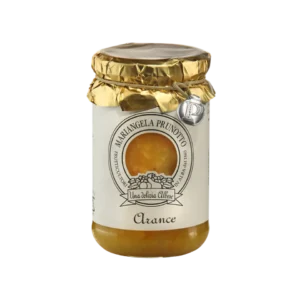
Orange Compote
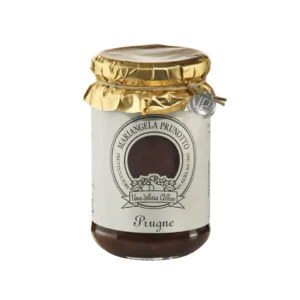
Plum Compote
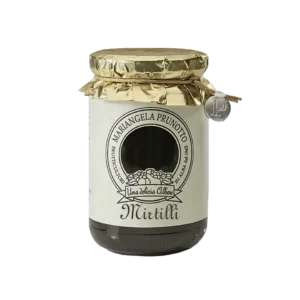
Blueberry Compote

[NEWSLETTER]

Subscribe to the Newsletter!

By clicking the "Send" button, you accept the terms of the Privacy Policy.